

Yes, the NHS can lawfully reclaim payments already made to your GP practice, including where the practice was not at fault and has already spent the money on patient care. The right of recovery is built into the contractual and financial framework that governs how practices are paid, and 2024 saw a well-publicised example of exactly how disruptive this can be when it goes wrong at scale.
This article explains the legal basis for NHS clawback, what happened in a real recent case that illustrates the risk, and what a practice can and cannot do when it receives a demand for repayment.
What “NHS clawback” actually means
“Clawback” is not a defined legal term, but it is commonly used to describe any situation where a commissioner, whether NHS England, an integrated care board (ICB), or historically a clinical commissioning group, seeks to recover money already paid to a GP practice. It typically arises in one of three ways:
- Administrative or payment system error, where a practice was paid on an outdated funding basis after a change in its contractual status or service provision.
- Ineligible claims, where a practice claimed an item of service, enhanced service, or premises payment it was not entitled to, whether through error or misunderstanding of the rules.
- Premises reimbursement adjustments, particularly notional rent, where a later valuation or review determines that reimbursement was set too high, or where income from third-party use of the premises should have reduced the reimbursement.
We cover the premises-specific version of this problem in detail in Notional Rent Clawback: Protecting Your Practice From NHS Premises Reimbursement Disputes, and the position on general contractual breach in Are You in Breach of Your GMS or PMS Contract?. This article focuses on clawback as a payment recovery issue rather than a breach or termination issue, though the two can overlap, and both sit within the wider field of NHS regulatory compliance that governs how practices are paid and held accountable.
The legal basis for recovery
GMS contracts are entered into under section 84 of the National Health Service Act 2006 and governed by the National Health Service (General Medical Services Contracts) Regulations 2015 (SI 2015/1862). The financial terms of that contract, what a practice is paid and when, are not set out in the regulations themselves but in the Statement of Financial Entitlements (SFE), a set of Directions issued by the Secretary of State under section 87 of the 2006 Act and updated at least annually alongside each year’s GP contract changes.
Recovery of overpayments is an established feature of the SFE framework: where a commissioner has paid a practice more than it was entitled to under the SFE, the commissioner has a contractual right to recover that overpayment. This applies regardless of whether the overpayment arose from an error by the practice or an error by the commissioner. The Nottinghamshire case below is a clear illustration of the latter.
Separately, the NHS General Medical Services Premises Costs Directions 2024, which came into force on 10 May 2024 and replaced the 2013 Directions, formalised specific clawback provisions covering premises-related overpayments: payments made by the commissioner in error, cases where entitlement criteria were not actually met, and cases where a reimbursed charge is later refunded to the practice by a third party (for example, a landlord refunding a service charge that had already been reimbursed as notional rent). We explain this framework in full in The NHS Premises Costs Directions Explained.
The Nottinghamshire case: a real recent example
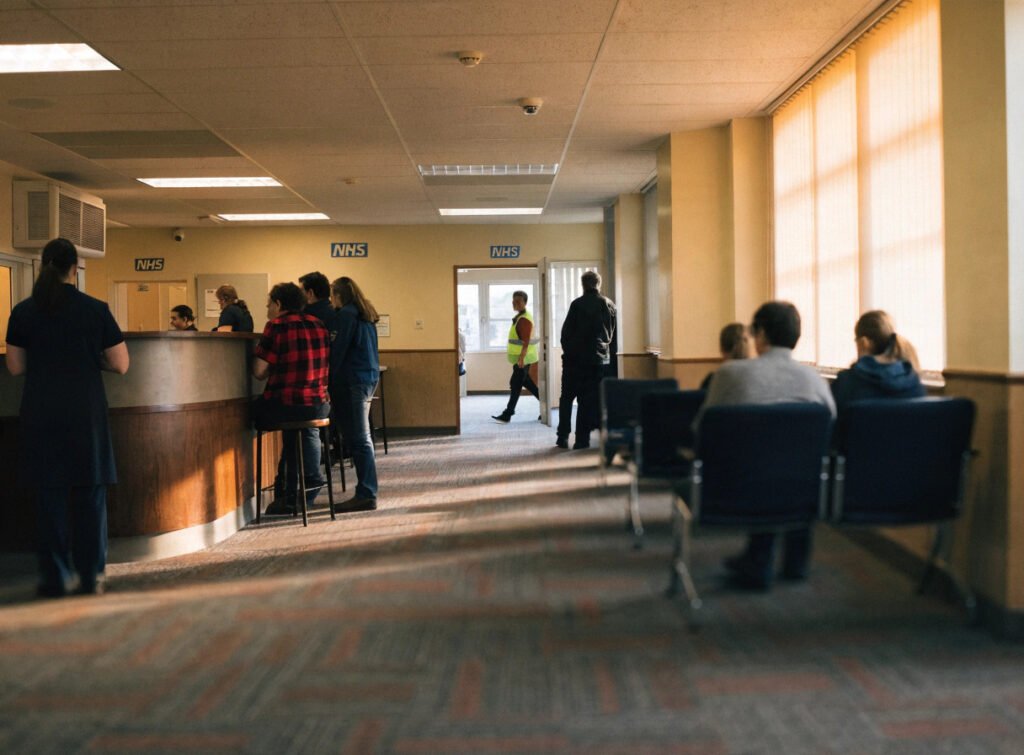
In 2024, the BBC reported that an administrative error by the Nottingham and Nottinghamshire ICB had resulted in 16 GP practices being overpaid, in some cases for a period of three and a half years. The practices had opted out of providing out-of-hours care, which should have triggered a 4.75% reduction in their funding, but the ICB’s payment system was not adjusted to reflect the change, so practices continued receiving the higher, pre-opt-out level of funding until the error was identified in October 2023.
According to the Nottinghamshire Local Medical Committee, affected practices were told they owed sums ranging from £20,000 to £300,000. Two examples reported by the BBC illustrate the scale involved: the Windmill Practice in Sneinton was told it owed £174,000, and subsequently decided to hand back its contract from June 2024 (though the LMC was clear this was not the only factor in that decision), and Tudor House Medical Practice in Sherwood was told it owed £108,000.
The ICB acknowledged the error was its own, describing it as arising from a mismatch between a change in contractual status and the payment mechanism not being updated to reflect it, and said it was working with affected practices individually to agree repayment over an agreed period, rather than demanding lump-sum repayment. Practice representatives were candid that, while the ICB was contractually entitled to recover the money, doing so was, in their words, “morally questionable” given the practices had spent the funds on legitimate patient care and had no reasonable way of knowing they were being overpaid.
The case is a useful illustration of three points that apply generally: the commissioner’s right to recover an overpayment does not depend on the practice being at fault, spending the money in good faith on patient care is not a legal defence to recovery (though it is a legitimate point to raise when negotiating repayment terms), and where the commissioner accepts the error was its own, that acceptance can shape a more workable repayment arrangement, even if it does not extinguish the underlying debt.
How practices can respond to a clawback demand
| Step | What to do | Why it matters |
|---|---|---|
| 1. Verify the calculation | Request a full breakdown of how the sum was calculated, including the relevant SFE provision or Premises Costs Directions clause relied on | Payment system errors are not always correctly identified or quantified on first review |
| 2. Check the time period | Confirm exactly which period the claimed overpayment covers | Recovery of a simple contract debt is generally subject to a six-year limitation period under section 5 of the Limitation Act 1980, so older elements of a claim may be open to challenge |
| 3. Raise the source of the error | Where the overpayment arose from a commissioner error rather than a practice error, put this on record in writing | It will not usually defeat the claim, but it is directly relevant to negotiating a proportionate and manageable repayment schedule |
| 4. Consider the dispute resolution route | GMS and PMS contracts include a formal NHS dispute resolution procedure, administered by NHS Resolution, for genuine disputes about entitlement | This is the correct forum if the practice disputes that an overpayment occurred at all, rather than simply the repayment terms, and our dispute resolution team can advise on whether it is the right route for your case |
| 5. Negotiate repayment terms | Commissioners can, and in the Nottinghamshire case did, agree phased repayment rather than requiring an immediate lump sum | A structured repayment plan protects cash flow and patient services during recovery |
Reducing the risk before it arises
Because clawback risk often originates with the commissioner’s own systems, as in Nottinghamshire, practices cannot eliminate it entirely. However, the following steps meaningfully reduce exposure:
- Reviewing payment schedules against the current SFE and Network Contract DES specification at least annually, rather than assuming funding levels are automatically correct.
- Flagging any change in contractual status, list size, opt-in or opt-out of a service, or change in premises arrangements to the commissioner in writing, and following up if the corresponding payment adjustment does not appear.
- Keeping a clear audit trail of correspondence relating to funding changes, which is invaluable if a dispute arises years later.
- Taking early legal advice as soon as a clawback demand is received, rather than after a repayment schedule has already been agreed, since the terms of that schedule are often negotiable.
What This Means for Your Practice
A clawback demand can arrive years after the funding in question was received and spent, and the fact that the error originated with the commissioner does not, on its own, prevent recovery. What it does affect is how much room there is to negotiate the terms of repayment and to challenge the calculation itself. Practices that engage early, verify the figures, and use the formal dispute mechanisms where genuinely appropriate are in a far stronger position than those that simply accept the first demand at face value.
We advise GP practices on responding to clawback demands, from initial verification through to formal dispute resolution where entitlement is genuinely in question. If your practice has received a clawback notice, get in touch with our healthcare team or call us on +44 207 566 1188, or email info@gurvelegal.com.

