

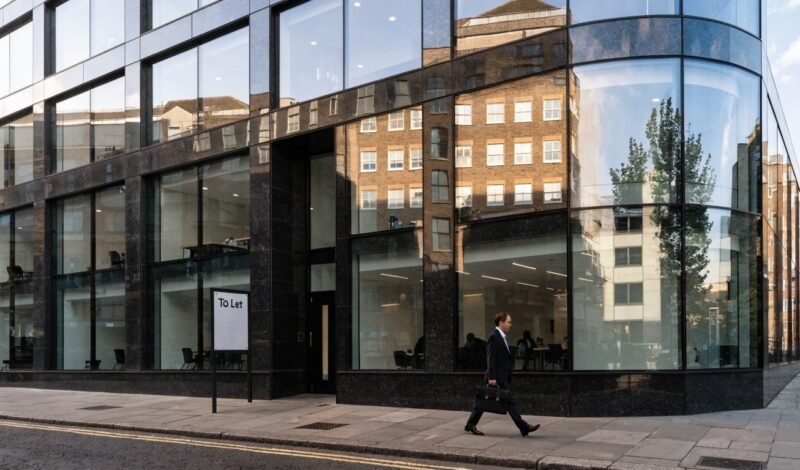

If you are buying, selling or leasing business premises anywhere in the UK, you need a commercial property solicitor to handle the title checks, the lease terms and the due diligence that protects you from problems you cannot see on a viewing. At Gurve Legal we act for SMEs and owner-managed businesses on transactions ranging from a single shop letting to a multi-site portfolio acquisition, with particular strength in high-value London commercial property.
This guide sets out what a commercial property solicitor actually does, the transaction types we handle most often, the due diligence and tax steps involved, and how long a typical deal takes. It is written for business owners and directors, not for other lawyers, so we have kept the technical detail accurate but explained the terms as we go.
What a Commercial Property Solicitor Actually Does
A commercial property solicitor manages the legal side of buying, selling or leasing business premises: offices, shops, warehouses, restaurants, and dental or medical premises among them. In practice that means reviewing and negotiating the contract, running title checks at the Land Registry, raising and answering due diligence enquiries, arranging property searches, calculating and reporting any Stamp Duty Land Tax due, and coordinating exchange and completion with the other side’s solicitor, the agents and any lender involved.
We act for both sides of these transactions: buyers and sellers, landlords and tenants. That matters in practice, because understanding how the other side’s solicitor is likely to approach a point makes negotiation faster and less adversarial. Instructing a solicitor is not a legal requirement for a commercial property transaction, but given the sums involved and the technical detail in a commercial lease or sale contract, proceeding without one is a significant risk.
Commercial Property Transactions We Advise On
“Commercial property” covers a wide range of transaction types, and the right approach differs depending on which one applies to you.
| Transaction type | What it typically involves |
|---|---|
| Buying commercial premises (freehold) | Title investigation, due diligence, contract negotiation, SDLT, registration at the Land Registry |
| Selling commercial premises | Replying to buyer enquiries, producing title documents, negotiating the sale contract |
| Taking a new lease (as tenant) | Negotiating rent, term, break clauses, repair and service charge obligations, and permitted use |
| Granting a lease (as landlord) | Drafting lease terms, deciding whether to contract out of the Landlord and Tenant Act 1954, managing rent deposits or guarantees |
| Renewing or renegotiating a lease | Statutory renewal procedure, rent review, updated lease terms |
| Buying or selling dental, medical or veterinary premises | The above, plus regulatory considerations specific to healthcare premises and, where relevant, CQC registration timing |
| Portfolio or multi-site acquisitions | Coordinated due diligence and completion across several titles, often to a tight timetable |
Freehold or Leasehold: Understanding the Difference
Buying the freehold gives you full ownership and control of the building, subject to planning law and any covenants affecting the title. It suits businesses that want long-term certainty over their premises and are prepared to carry the capital cost. Leasehold occupation, by contrast, means you hold the right to occupy for a fixed term under terms set by the lease, in exchange for rent. Most SMEs taking new premises for the first time, or expanding into a second site, lease rather than buy, because it ties up less capital and gives more flexibility to relocate as the business grows.
The distinction matters for the legal work involved too. A freehold purchase is a one-off transaction that concludes at completion. A lease creates an ongoing relationship, governed by obligations that can run for years, so getting the lease terms right at the outset avoids disputes further down the line over repairs, rent reviews or your ability to assign or sublet if your business needs change.
Due Diligence: What We Check Before You Commit
Before any commercial property transaction completes, thorough due diligence protects you from inheriting problems that are not obvious from a viewing or a set of accounts.
| Check | Why it matters |
|---|---|
| Title and boundaries | Confirms the seller or landlord actually owns or controls what they are selling or letting, and identifies any restrictive covenants or third-party rights |
| Commercial Property Standard Enquiries (CPSE) | A standardised set of questions raised during due diligence to uncover issues affecting the property before purchase |
| Local authority searches | Reveals planning history, proposed road schemes, enforcement notices and building regulation compliance |
| Environmental searches | Identifies contamination risk, flood risk and other environmental liabilities that can affect value or future use |
| Planning permission and permitted use class | Confirms the property can lawfully be used for your intended purpose, or what would be needed to change that |
| Access and easements | Checks rights of way, shared access and services are properly documented and will continue after completion |
| VAT and option to tax status | Determines whether VAT is chargeable on the purchase price or rent, which affects the true cost of the deal |
| Existing tenancy schedule (investment purchases) | Confirms rent, lease terms and any arrears where the property is being bought with sitting tenants in place |
On the VAT point specifically: a commercial property sale or letting is normally exempt from VAT, but a seller or landlord can “opt to tax” a property, which makes VAT chargeable on the price or rent. Whether that has happened, and what it means for you, needs checking early, since it affects cash flow and, for a buyer who cannot recover VAT, the real cost of the transaction.
Stamp Duty Land Tax on Commercial Property
Stamp Duty Land Tax (SDLT) applies to commercial and mixed-use property purchases in England and Northern Ireland above set thresholds. For a freehold purchase, the current bands are:
| Portion of purchase price | SDLT rate |
|---|---|
| Up to £150,000 | 0% |
| £150,001 to £250,000 | 2% |
| Above £250,000 | 5% |
SDLT applies on increasing portions of the price, in the same way income tax bands work, rather than a single rate applying to the whole amount once you cross a threshold. A new commercial lease can also attract SDLT on the net present value (NPV) of the rent payable over the term, separately from any premium paid:
| NPV of rent | SDLT rate |
|---|---|
| Up to £150,000 | 0% |
| £150,001 to £5,000,000 | 1% |
| Above £5,000,000 | 2% |
We calculate the SDLT due on your transaction and handle the return to HMRC as part of the completion process, so this is not something you need to work out yourself.
Commercial Leases and the Landlord and Tenant Act 1954
Most business tenancies in England and Wales are protected by Part II of the Landlord and Tenant Act 1954, which gives a tenant the right to apply for a new lease when the current one ends, known as security of tenure. Landlords and tenants can agree to remove this right before the lease is signed, a process usually called “contracting out,” provided the correct notice and declaration procedure is followed beforehand.
Whether a lease is inside or outside the Act has real practical consequences. A tenant with security of tenure has continuity of trade at that location built into the lease. A tenant taking a lease contracted out of the Act has no automatic right to renew, so needs to weigh that against the rent, term and flexibility on offer. We advise landlords on which approach suits a given letting, and tenants on what a contracted-out lease means for their long-term position at the premises, including in disputes over lease renewals, rent reviews and dilapidations at the end of a term.
How Long Does a Commercial Property Transaction Take?
A straightforward commercial acquisition or letting can complete in four to eight weeks from an agreed offer, assuming due diligence raises nothing significant and there is no chain or financing delay on either side. More complex matters, such as a multi-let investment purchase, a portfolio acquisition, or a letting that needs planning consent for change of use, typically take longer. We give a realistic timeline early in the transaction, and flag anything likely to slow things down as soon as we see it, rather than at the point it becomes a problem.

Nationwide Coverage, With Particular Strength in London
We advise on commercial property transactions across England and Wales, covering offices, shops, warehouses, restaurants and medical or dental premises for clients based well beyond London. Our deepest experience, however, is in high-value London commercial property, where transaction values, lease structures and planning considerations tend to be more complex than in most regional markets. If your business is based outside London but the transaction itself is not location-specific, that experience carries across directly, and if the premises in question are in or around London, it is a genuine point of strength rather than a general claim.
Why Instruct Gurve Legal as Your Commercial Property Solicitors
We built our commercial property practice around SMEs and owner-managed businesses, which shapes how we work rather than being a line on a website. That means clear, upfront pricing including fixed-fee options where the scope of work allows it, direct access to the solicitor handling your matter rather than being routed through layers of support staff, and a pace that matches the tight deadlines commercial deals are usually run on. We act for both sides of the relationship, landlords as well as tenants, buyers as well as sellers, which gives us a practical read on how the other side is likely to approach a given point in negotiation.
Read more about our commercial property lawyers service, our approach to commercial property conveyancing, or our work on commercial leases and ongoing landlord and tenant matters. Where a relationship has broken down rather than being negotiated from scratch, our commercial property litigation team advises on lease renewals, rent disputes, dilapidations and break clause disputes, and our acquisitions and disposals team handles transactions of every scale. If a lease is part of what you are reviewing, our article on commercial lease red flags is worth reading alongside this guide, and if the premises in question are a GP surgery or similar healthcare setting, see our piece on why a GP surgery lease differs from a standard commercial lease.
Talk to Our Commercial Property Solicitors
If you are buying, selling or leasing business premises and want a clear view of what is involved before you commit, get in touch with our commercial property team, call us on +44 207 566 1188, or email info@gurvelegal.com. We will give you a realistic view of timescale and cost before any work begins.
